
DA-CON – The DAC That Turns Numbers Back into Music
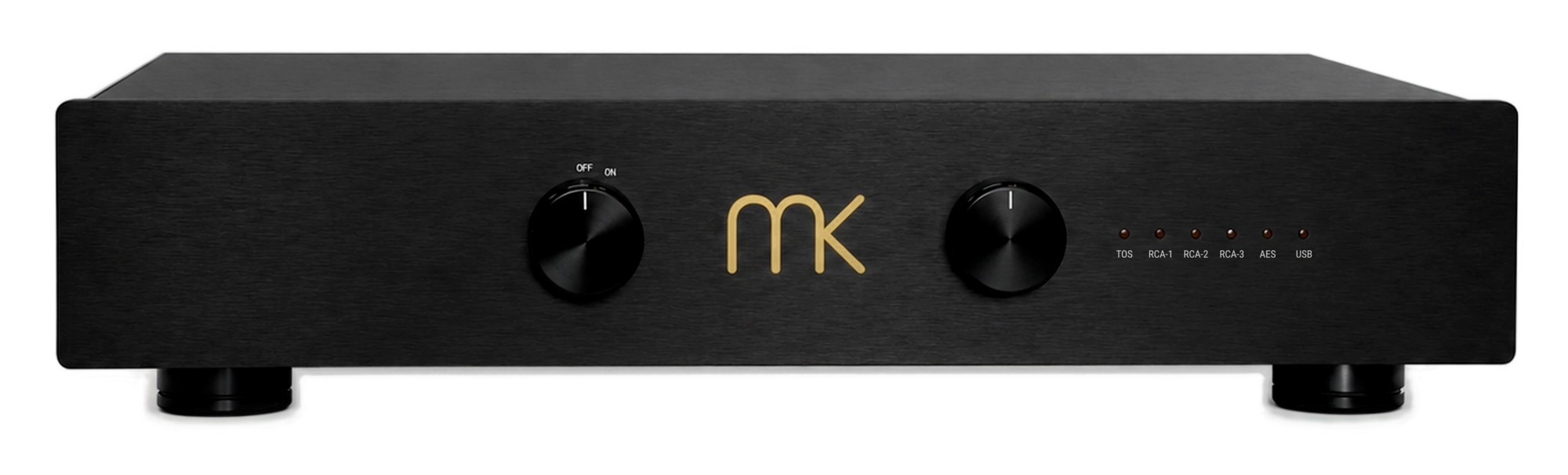
The aim in developing the DA-CON was to bring together the sonic strengths of R2R and delta-sigma DACs: the ease, musicality and sense of body associated with the former, combined with the punch, precision and resolving power of the latter.
At the heart of our DAC are its analogue output stage and analogue filter, both of which have received painstaking attention. This is where numbers become music. Where a collection of individual notes becomes a coherent, emotionally compelling performance that raises goosebumps and leaves you wanting more.
Design Goals and Philosophy
Eliminating interference and reducing noise to the lowest possible levels are central to MK Analogue’s approach. This thinking underpins our MC step-up transformers and our dedicated, exceptionally low-noise MM phono stage. The DA-CON reflects the same commitment, with extensive measures designed to let the music flow freely:
- Fully balanced signal paths: From the input board through to the balanced outputs.
- Minimal component spacing: Particularly between the sample-rate converter, clock and DAC chip.
- Consistent dual-mono construction: Separate PCM1794 DAC chips, clocks, input receivers and associated circuitry for each channel.
- Multiple stages of galvanic isolation: Implemented throughout the signal path.
- Refined phase-locked loop circuitry: For clock regeneration and jitter reduction.
- Premium components throughout: Including Dale resistors, silver-mica capacitors and clocks with a frequency accuracy of ±2.5 ppm.
The analogue output stage is central to the DA-CON’s sonic character. Here, too, the design draws on the best of two worlds, combining op-amps with discrete components. Its carefully developed analogue filter pays particular attention to group-delay performance, contributing to a more expansive soundstage and exceptionally precise transient reproduction.
Technical Design
PCM1794: A Classic in Dual Mono
Texas Instruments’ PCM1794, still highly regarded by many audio enthusiasts, is implemented in a fully dual-mono configuration in the DA-CON. A dedicated DAC chip for each channel provides excellent channel separation and an improved signal-to-noise ratio.
Noted for its very low distortion, the PCM1794 features balanced current outputs. These allow considerable freedom in the design of the crucial current-to-voltage conversion stage, analogue circuitry and analogue filter.
Fully Balanced, from Input to Output
- The MK Analogue DA-CON uses a fully balanced architecture throughout. Signal handling follows the same rigorous approach at every stage:
- Input conditioning: Signals arriving via S/PDIF, Toslink and USB are converted to balanced form at the outset, with a corresponding increase in signal level.
- Transformer isolation: Signals are galvanically isolated before reaching the input receiver.
- Further isolation: After the input receiver, an additional stage of galvanic isolation uses optocouplers or a three-channel digital isolator to minimise interference.
- Balanced dual-mono signal paths: This architecture continues through the sample-rate converters, local master clocks, DAC chips and analogue output stages to the XLR outputs.
- For the best possible performance, the recommended connections are the XLR analogue outputs and the AES/EBU digital input. Thanks to the considerable engineering effort invested in the digital input board, the other digital inputs come remarkably close, but AES/EBU delivers the ultimate performance.
An Exceptional Power Supply
A power supply as elaborate as the DA-CON’s is a rare sight in a DAC. No fewer than six toroidal transformers, three per channel, provide separate supplies for:
- The analogue section.
- Digital section 1: The input receiver and digital input board.
- Digital section 2: The PCM1794 DAC.
A total of 48 diodes provide rectification for the six encapsulated toroidal transformers, which account for a substantial proportion of the DA-CON’s weight of more than 12 kg. Each transformer has two secondary windings, and each winding is rectified separately by four diodes. In the analogue section, this arrangement establishes a stable ground reference, free from mains-borne interference.
In the digital section, the four separate supply voltages derived from the two relevant toroidal transformers are followed by a total of ten voltage regulators. The digital input board and the input section of the digital receiver are thus powered separately from the receiver’s output section.
Each PCM1794 has its own dedicated toroidal transformer. One secondary winding powers its input section, while the other supplies only its analogue outputs.
Defining the Sound: The Analogue Output Stage and Filter
During his lifetime, Matej Kelc devoted considerable time to developing the output stage, refining it through extensive listening tests. His preferred configuration, once again fully balanced and dual mono, comprises:
- OPA828 op-amps: For current-to-voltage conversion.
- A discrete-component feedback network: Incorporating silver-mica capacitors.
- An active low-pass filter: Built around a second OPA828, with particular attention to group-delay performance.
- High-current BUF634 output buffers: Providing substantial current-drive capability.
Chassis Construction and Vibration Isolation
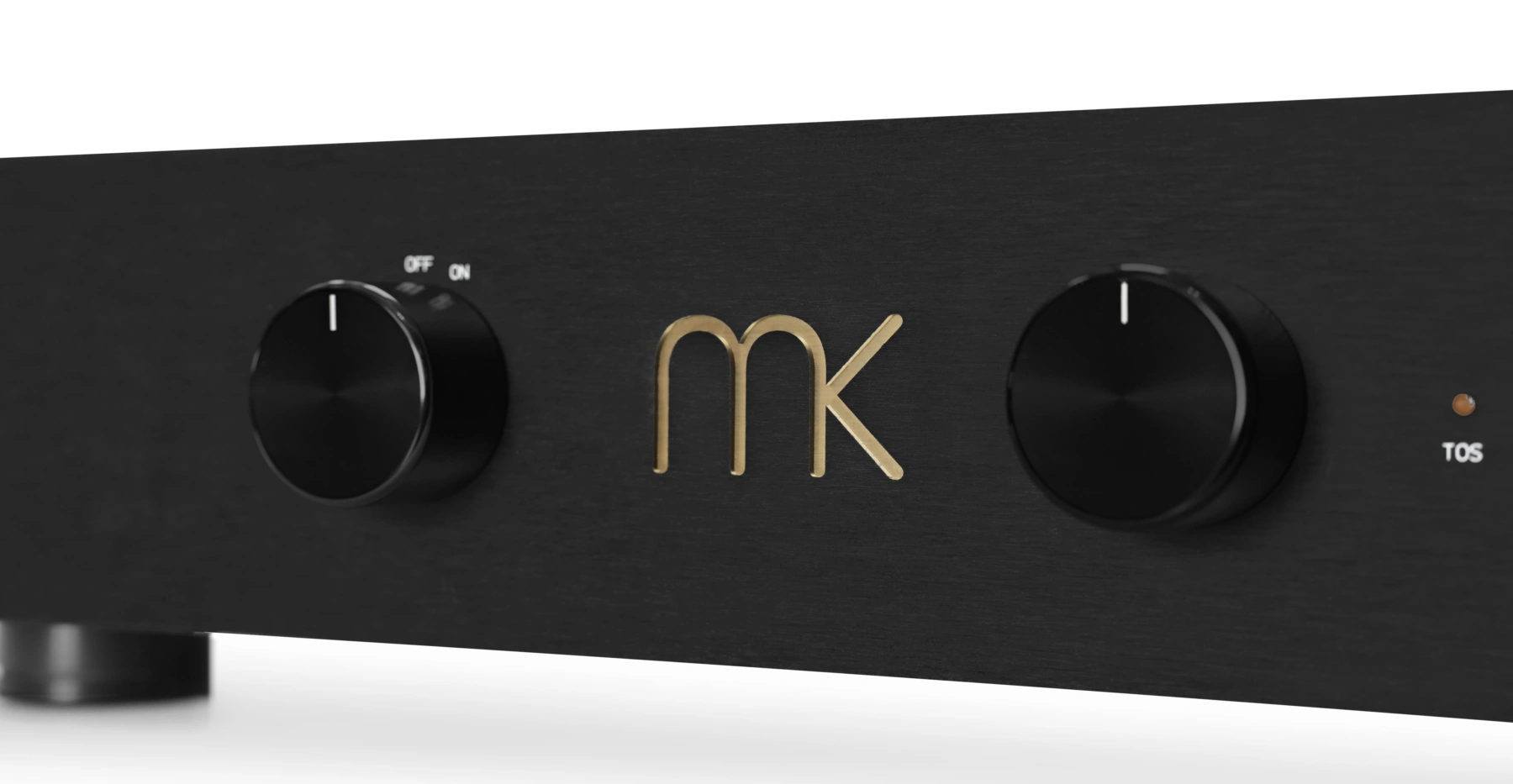
Accommodating six toroidal transformers while maintaining the required clearance from the circuit boards called for a chassis 48 cm wide. Built from solid aluminium, it combines clean lines with an understated aesthetic. Brushed brass behind the logo lends the lettering a subtle golden sheen, while additional bitumen damping is applied to the top cover.
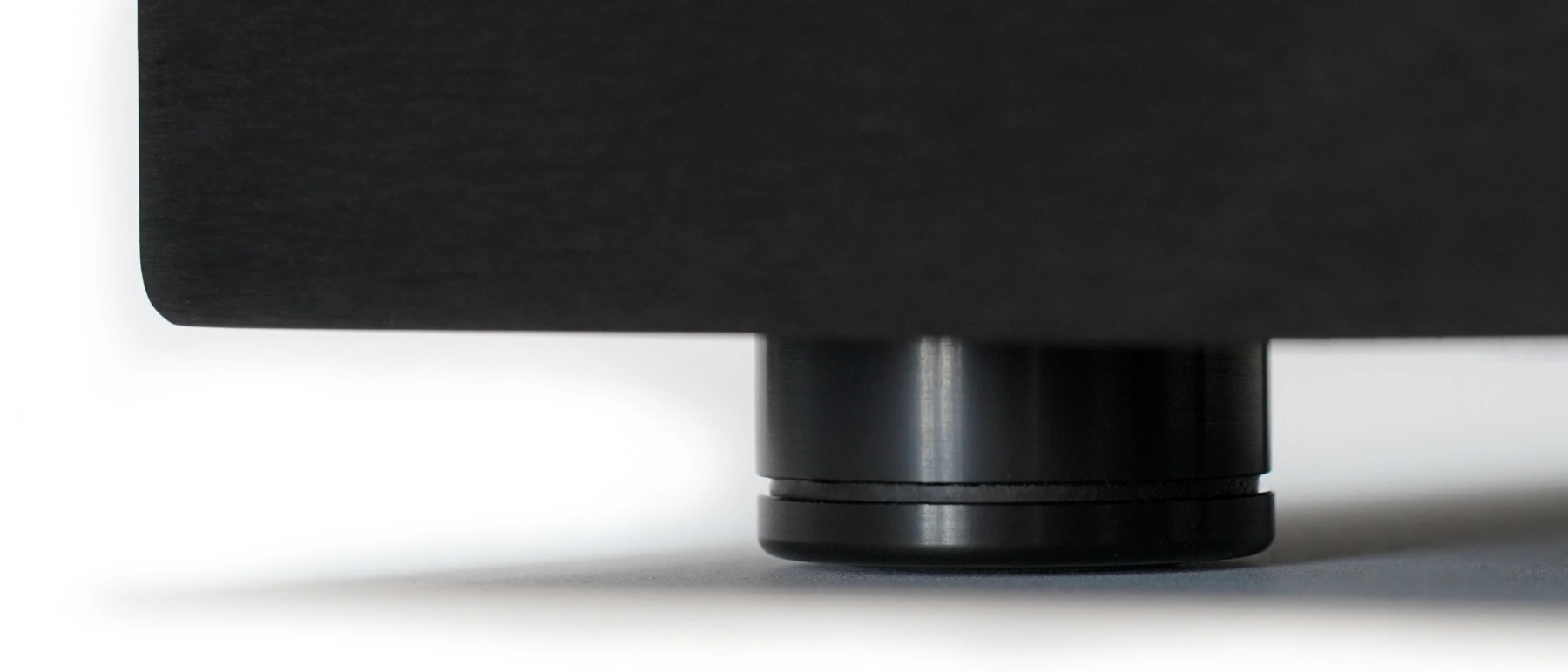
The two front-panel rotary controls have a reassuring feel, and their symmetrical placement reinforces the design’s uncluttered, purposeful appearance. For effective vibration isolation, MK Analogue has chosen bfly Pure isolation feet in a version precisely matched to the unit’s weight.
- Their layered construction comprises:
- A cork and natural-rubber layer.
- An aluminium body acting as a separating layer.
- A second cork and natural-rubber layer.
- A Sorbothane ring with an internal air chamber acting in parallel.
- A special rubber layer.
- An aluminium cap.
- A gel pad of a specified firmness.
Connections
Digital Inputs
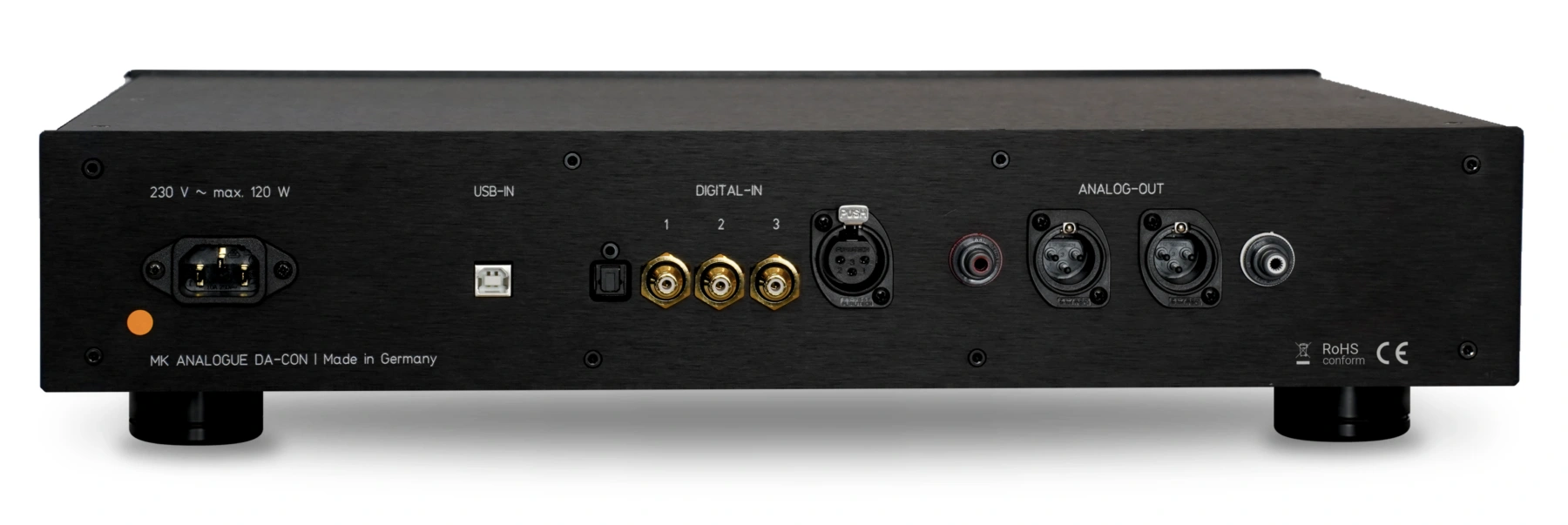
The DA-CON offers five digital inputs, plus a USB connection on a dedicated board. Where the source allows a choice, AES/EBU is the recommended connection, not least because it uses a rhodium-plated Furutech XLR socket.
Input selection is handled by relays located immediately behind the rear-panel sockets. The large front-panel rotary selector merely controls these relays and remains entirely outside the digital signal path. This arrangement also keeps signal paths short, avoiding the need to route the digital signal to a selector at the front of the chassis.
Unlike conventional non-latching relays, the bistable, or latching, relays used here require power only briefly, while switching. Once selected, the contacts remain in position without any holding current. During listening, the relay coils therefore draw no current and generate no heat. It is another detail in the DA-CON’s systematic approach to minimising interference.
Analogue Outputs
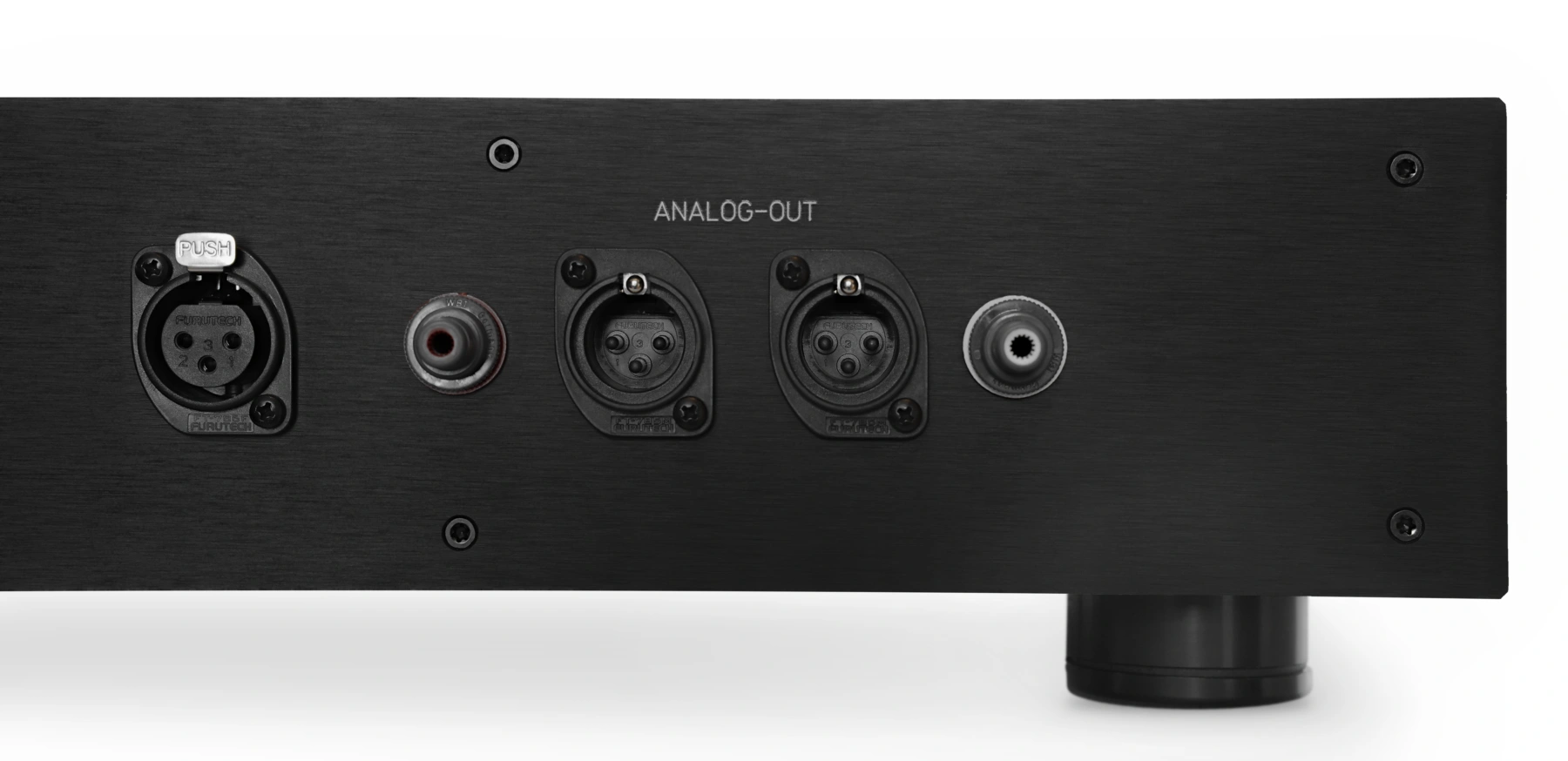
The DA-CON provides simultaneous RCA and XLR analogue outputs. Both use high-quality connectors:
- Balanced outputs: Rhodium-plated Furutech XLR sockets.
- Unbalanced outputs: WBT-0210 Cu nextgen™ RCA sockets.
These connectors ensure a secure fit and reliable electrical contact. MK Analogue also supplies Sieveking Sound RCA and XLR caps for unused outputs.
Latching relays are used at the output as well. The PCM1794’s output is muted only during power-up and power-down, source changes and sample-rate changes. Rather than breaking the signal path, the output relays mute the signal by shunting the signal conductors to ground. The music signal therefore does not pass through an additional series relay contact in the muting circuit.
The practical benefit is silent sample-rate switching, with no clicks, crackles or pops. This is particularly welcome in digital systems with multiple processing stages.
The Sound of Music
The DA-CON combines fine resolution with the naturalness and fluidity of an analogue presentation. It reveals musical detail without divorcing it from the performance as a whole. The result is an immediately engaging sound that remains relaxed and easy to enjoy through extended listening sessions.
Natural Timbre and Tangible Presence
Voices have body, expression and a firmly defined position within the soundstage. Subtle inflections are readily apparent, yet never thrust forward. Instruments retain their distinctive tonal character: wood sounds warm and resonant, brass has brilliance, and bowed strings preserve their texture and bite.
The DA-CON combines precise definition with a natural sense of decay. Attack, resonance and release form a continuous whole. Its tonal richness comes not from an overlay of flattering warmth, but from a nuanced, convincing portrayal of voices and instruments.
Dynamics with Control and Substance
The DA-CON renders fast transients with clarity, immediacy and impact. Even densely scored passages remain intelligible, with individual attacks clearly differentiated in both shape and intensity. Through large dynamic swings, the presentation retains its composure and musical flow.
In the bass, depth and substance are matched by precise control. Low notes carry weight without sounding inflated, and definition without sacrificing body. Rhythmic accents lock together effortlessly, giving the music energy and forward momentum. Ease of presentation never comes at the expense of drive or attack.
A Soundstage Alive with Atmosphere
The DA-CON creates an expansive, precisely organised soundstage with clearly resolved width and depth. Voices and instruments have a tangible, three-dimensional presence, with air around them, yet remain integral to the performance.
Beyond precise imaging, it conveys the atmosphere of the recording. Spatial depth, delicate reverberant tails and the interplay between musicians coalesce into a coherent musical picture. Rather than a collection of discrete sound sources, the performance unfolds as an immersive, engaging whole.
Technical data and details, price
| Specification | Value |
| Digital inputs |
|
| Analogue outputs |
|
| Formats / sample rates | 44.1 kHz; 48 kHz; 88.2 kHz; 96 kHz; 176.4 kHz; 192 kHz (linear PCM, 16 to 24 bit) |
| Signal path | Fully balanced (S/PDIF input signals are also converted to balanced signals) |
| DAC chip | TI 1794 in a dual-mono configuration |
| Output voltage |
|
| Clock / PLL | 27 MHz ± 2.5 ppm |
| Signal-to-noise ratio | −112 dB |
| THD | −112 dB |
| THD+N | −110 dB |
| Frequency response | 10–20,000 Hz (+0 dB / −0.5 dB) |
| Power supply | 6 toroidal transformers supplying the analogue and digital sections and the input board |
| Vibration isolation | 4 × bfly Audio Pure isolation feet |
| Dimensions (W × H × D) | 48 × 10.6 × 39.8 cm (including feet, connectors and control knobs) |
| Weight | 12 kg (14.6 kg including packaging, excluding optional accessories) |
| Colour | Black (not available in silver) |
| Retail price | €7,690 |
| Accessories |
|